EU regulatory guide
CPNP Notification: what it is, who files it, and what the portal requires
CPNP is the European Commission's mandatory online system for notifying every cosmetic product before it is placed on the EU market. No notification, no legal sale.
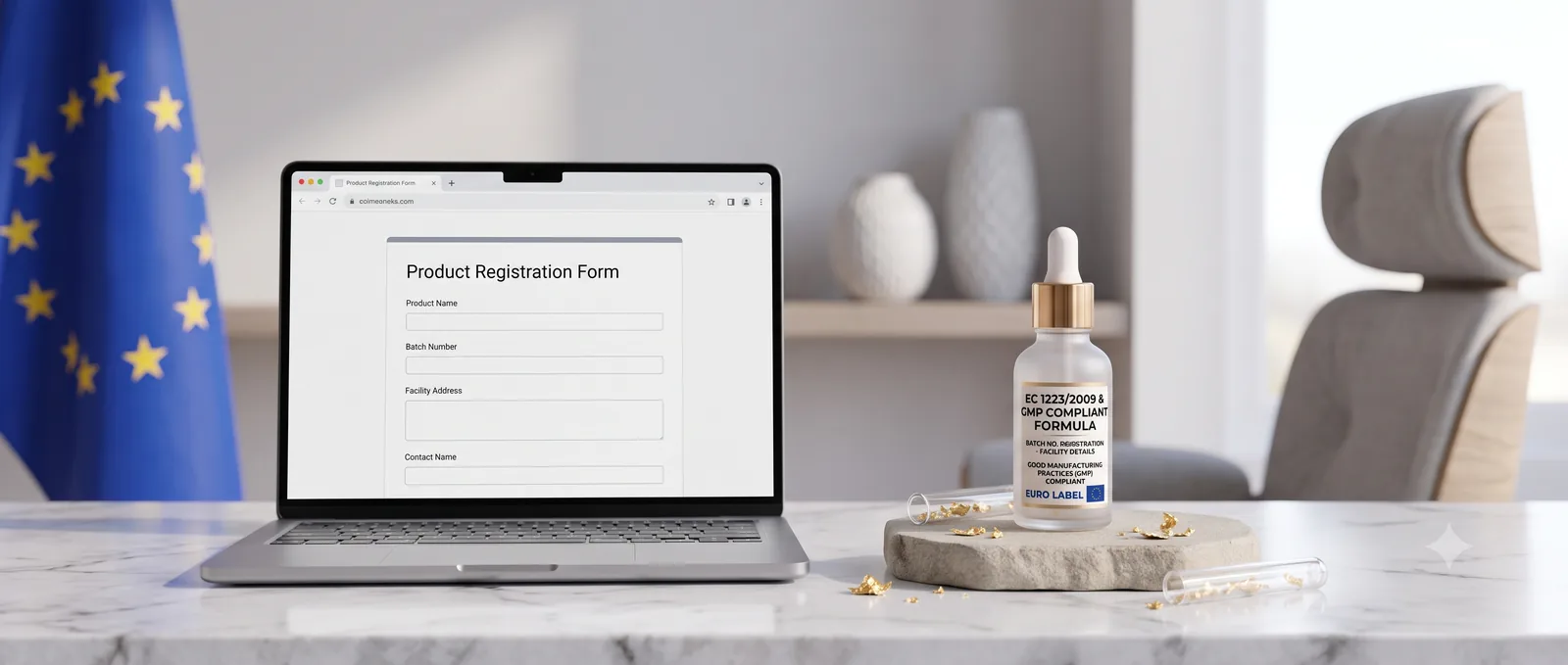
CPNP definition: what it stands for and why it exists
Before the CPNP existed, brands notified products separately in each country. The Commission replaced that patchwork with a single portal: one notification covers all 27 member states, with no national repeat filings.
The data does not sit idle. Competent authorities use it for market surveillance. Poison centres use it to identify product composition in real time when someone swallows or is exposed to a product. A notification is not box-ticking; it is what makes emergency medical response possible.
Who needs to notify on CPNP?
The rule is absolute: no product may be placed on the EU market before the notification is complete. There is no grace period and no provisional sale window. A brand that ships to an EU retailer without a completed notification breaches the regulation from day one.
What information does a CPNP notification require?
Two of those fields carry practitioner traps. First, the INCI list must use exact INCI nomenclature; supplier trade names invalidate the record. Second, nanomaterials trigger a separate obligation under Article 16: a distinct notification to the Commission six months before the product is placed on the market. It cannot be folded into the standard Article 13 filing, and the six-month clock is why nano-containing sunscreens and foundations need their regulatory work started half a year before the launch date, not the week before.
The CPNP is a notification system, not a product approval. Submitting data does not certify safety. The Product Information File and the signed Cosmetic Product Safety Report must be complete before the portal ever comes into it.
Who can submit a CPNP notification?
The Responsible Person is not a mailbox. They carry full legal liability for the product: the accuracy of the safety assessment, the correctness of the label, the completeness of the notification. Appointing an entity that does not genuinely understand the regulation creates exposure that lands back on the brand.
The most expensive CPNP mistake we see is notifying a product that should never have been notified at all. A client recently asked us to file an eyelash adhesive. Before touching the portal we checked the Commission’s Borderline Manual: a glue applied to attach artificial lashes is not a cosmetic within the meaning of the regulation, so a CPNP entry would have put a non-cosmetic product into the cosmetic system, with the wrong safety framework attached to it. The lesson: classification comes first, the portal comes last. A notification is only as good as the legal analysis underneath it.
How to access and use the CPNP portal
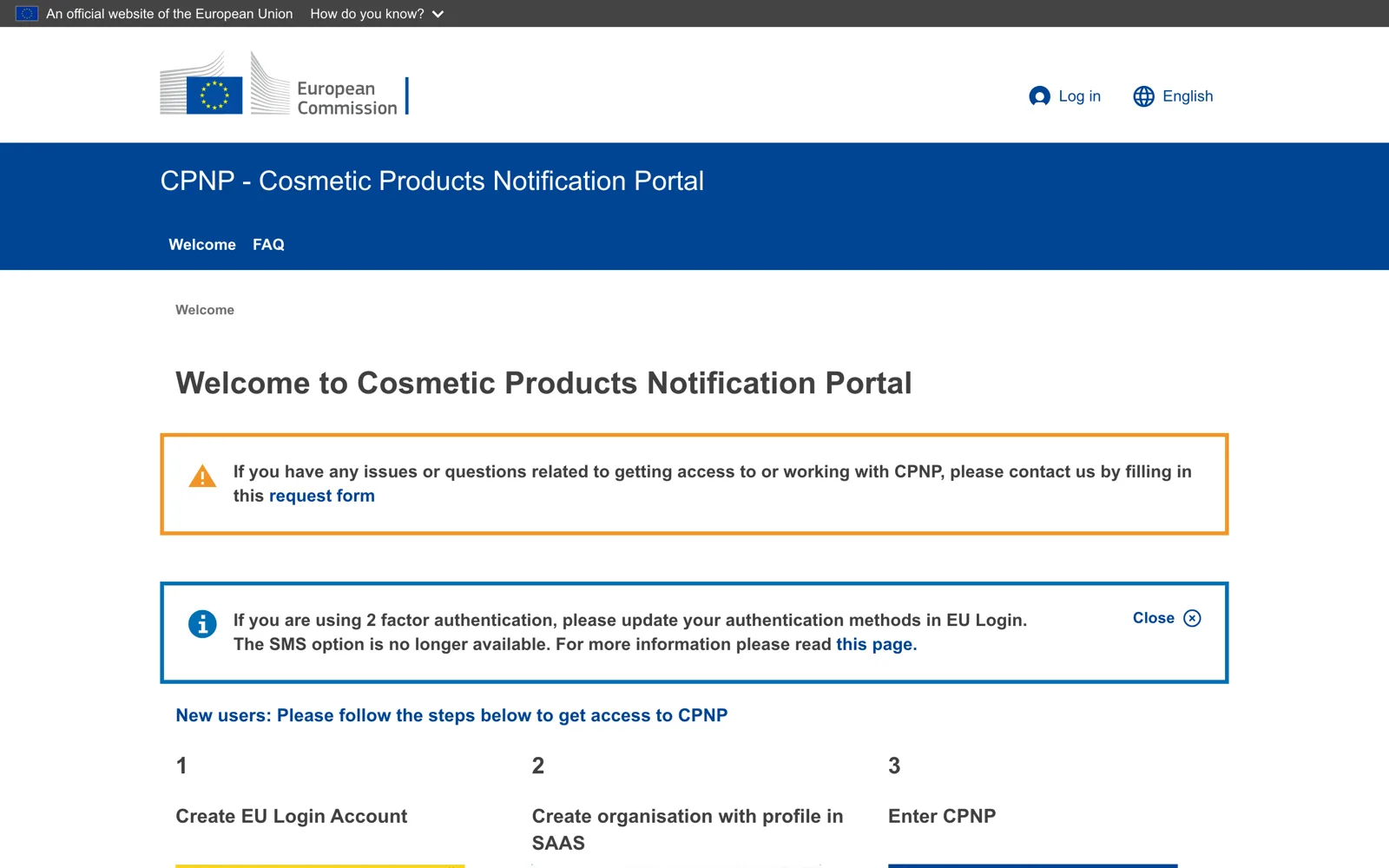
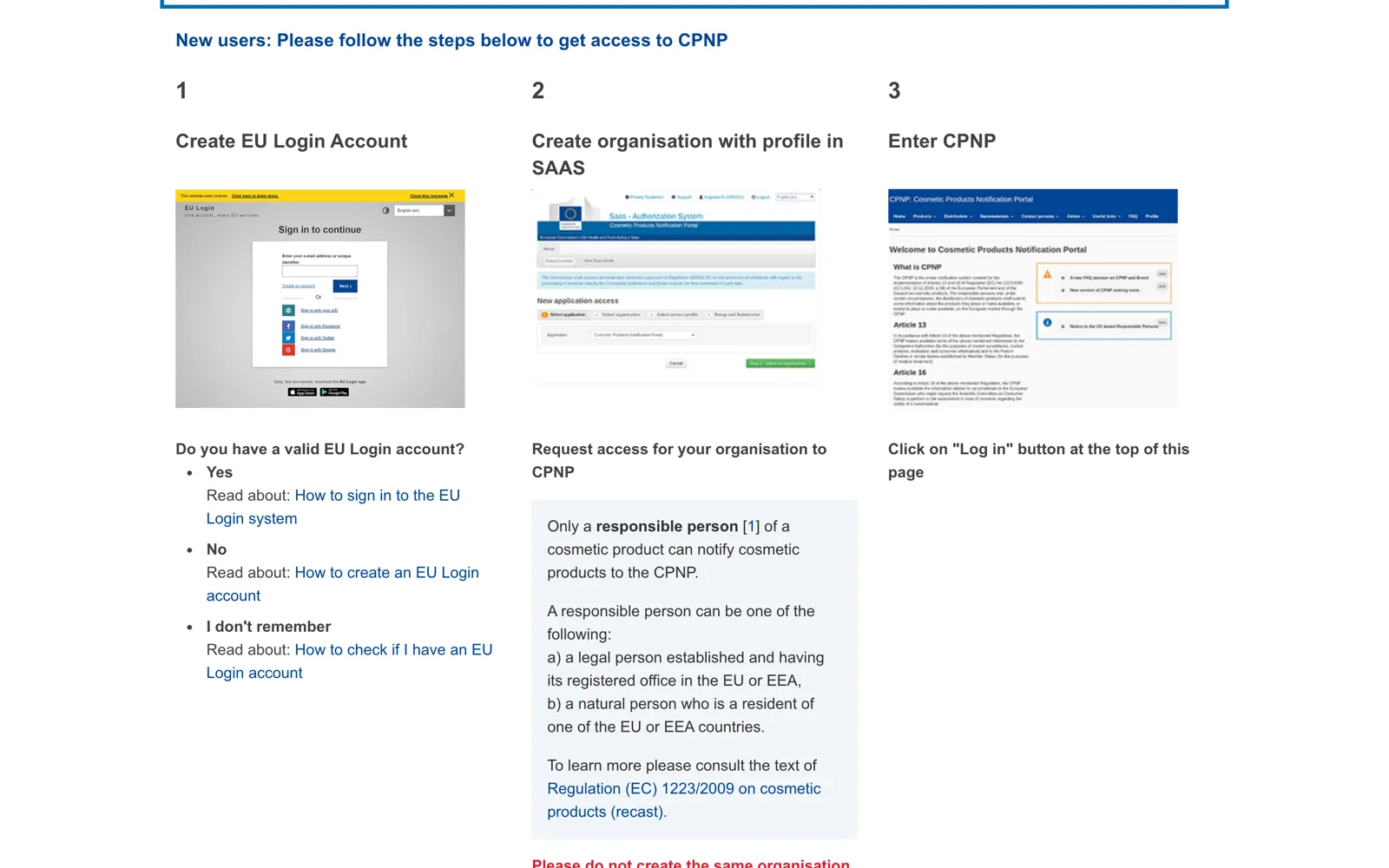
Once inside, each product follows a structured form: category, formulation data, label image, packaging photo, Responsible Person details. The record becomes visible to authorities and poison centres immediately. Keep it current: a formula change, a label update or a change of Responsible Person all require the record to be updated, and an outdated notification is a non-compliant notification. The full filing sequence is in our step-by-step CPNP notification guide.
What happens to the notification when you switch Responsible Person?
In practice the switch is a controlled handover: the new RP takes over the Product Information Files, re-notifies each product, and the label’s RP name and address change with the next print run. Done in the right order it causes no sales interruption; done late it leaves products on shelves referencing an RP that no longer answers for them. The full sequence is in our guide to switching your EU Responsible Person.
CPNP and the UK: what changed after Brexit?
A brand selling in both markets therefore needs two notifications, two Responsible Persons and two label blocks. Handling both through one partner removes the duplication; that is exactly the pairing of our EU and UK Responsible Person services.
Common CPNP mistakes, and what gets flagged first
From the notifications we review, the first-rejection causes rank like this: wrong product category (a leave-on classified as rinse-off changes the whole exposure assessment), trade names where INCI nomenclature belongs, label and notification naming different legal entities, and nano ingredients filed under Article 13 alone with no six-month Article 16 pre-notification. Behind all of them sits the structural one: treating the CPNP as the whole compliance process. The notification is the final step; without a completed PIF and a signed CPSR underneath, it is a compliant-looking shell over an incomplete file.
The quiet failure mode is staleness. Brands file once and never revisit; three reformulations later the poison-centre record describes a product that no longer exists. Reformulation, repackaging, relabelling and RP changes all trigger an update duty.
FAQ
CPNP notification: frequently asked questions.
Primary sources cited in this guide. Regulatory status last verified 22 August 2026.