EU regulatory guide
Natural, clean, hypoallergenic: the claims rules.
Everything written on a cosmetic pack or product page is a regulated claim, from moisturising to dermatologist tested. The EU wrote the rulebook in Regulation 655/2013, and it is short enough to actually read. Here is what it allows, what it bans, and where brands get caught.
Reviewed by Cassandra Maddocks, chemist & biochemist · last reviewed 27 July 2026
Who regulates cosmetic claims in the EU?
The six criteria apply to any claim in any medium: pack, website, social post or marketplace listing. The full text sits at Regulation (EU) No 655/2013, and the claim evidence lives in the Product Information File.
Which claims are simply not allowed?
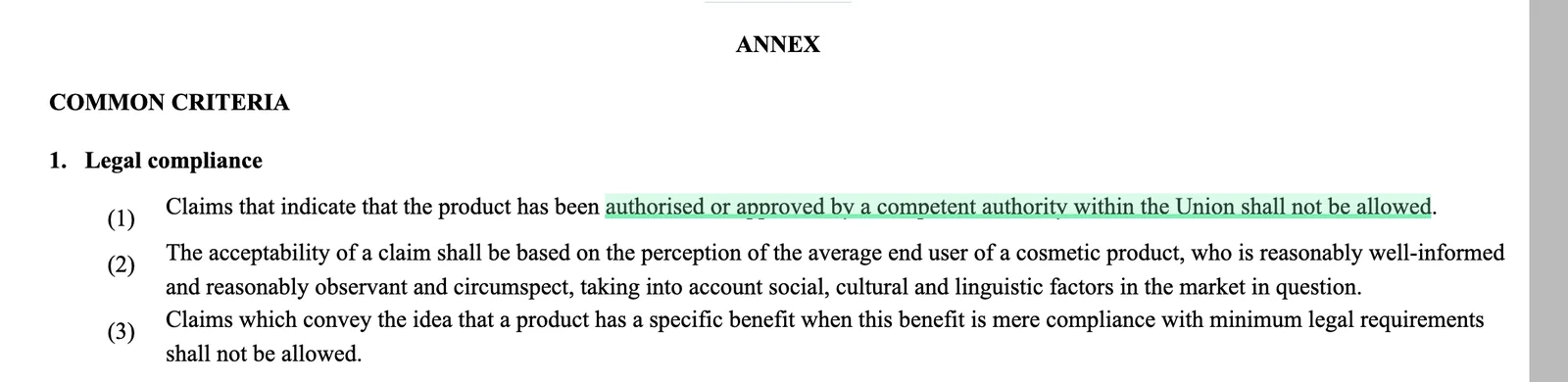
This connects to a rule brands meet on marketplaces: since notification is a record rather than an approval, a CPNP certified badge is both meaningless and unlawful as a claim. The US mirror is the FDA's own note that it issues no certificates, covered in our marketplace guide.
Can I say natural, clean or hypoallergenic?
The test is always the reasonably well-informed average consumer. Vague terms are not banned; unsupported impressions are. This is precisely what a claims review checks: each phrase against the evidence you actually hold, before an authority or a competitor does.
What about free-from claims like fragrance-free?
The 2019 change caught thousands of packs that still said paraben free, and non-EU stock printed that way keeps arriving. The claim-versus-INCI mismatch is one of the most common findings in our reviews, and consumers on forums spot it too. The label side of this, including where warnings must appear, is in the label requirements guide.
What is changing for green and sustainability claims?
Treat this the way we treat pending MoCRA rules: not yet enforced everywhere, but printing artwork today that says climate neutral or eco-friendly is printing a liability. The directive is at Directive (EU) 2024/825, and a green claim now belongs in every claims review we run.
How do US claims rules differ?
A claim set written for the EU usually survives the US; the reverse is not true, because US marketing tolerates drug-adjacent language the EU file cannot support. Both markets' label mechanics are compared in our US vs EU guide.
Primary sources cited in this guide. Regulatory status last verified 27 July 2026.
Related reading