Microbiological testing proves a cosmetic leaves the factory clean and free of the organisms that make people ill. It is one of the pillars the safety report stands on, and it follows a precise set of ISO methods. Here is what the tests are, what they prove, and where the results go.
Reviewed by Cassandra Maddocks, chemist & biochemist · last reviewed 28 July 2026
What is cosmetic microbiology testing?
A set of laboratory analyses that count the microorganisms in a finished cosmetic and screen for specific pathogens. It confirms the product was manufactured cleanly and carries no organisms that pose a risk to the user, which is a condition of the safety assessment required before any EU, UK or Swiss sale.
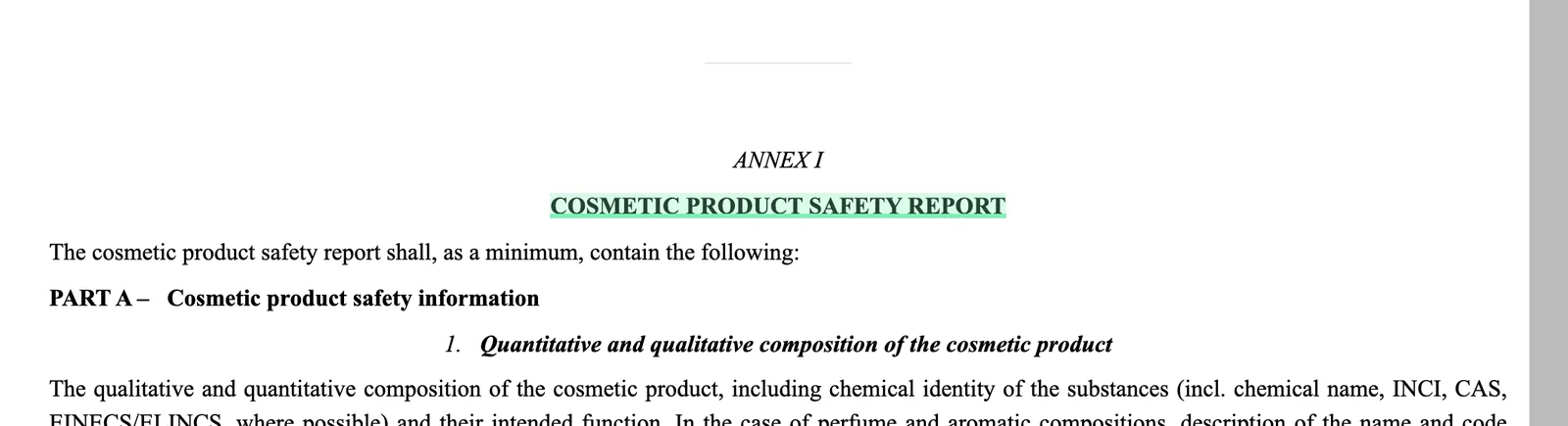
The legal driver is Annex I of Regulation (EC) No 1223/2009, which requires microbiological quality data in the safety report. The methods are internationally standardised so a result from one accredited lab is read the same way everywhere.
Annex I of Regulation (EC) No 1223/2009, the safety report structure these test results feed, as published on EUR-Lex, consolidation of 1 May 2026 (02009R1223, EN, 040.001). Captured 26 July 2026. View the official text.
What tests are included, and which ISO methods apply?
Two enumeration counts and a panel of pathogen screens. The total viable count of aerobic bacteria follows ISO 21149; yeast and mould follow ISO 16212. The specified pathogens are then screened individually: Pseudomonas aeruginosa (ISO 22717), Staphylococcus aureus (ISO 22718), Escherichia coli (ISO 21150) and Candida albicans (ISO 18416), with ISO 18415 covering detection of specified and non-specified organisms.
The acceptance limits themselves come from ISO 17516, which sets the microbiological limits a cosmetic must meet, tighter for products used around the eyes or on children under three. A competent lab reports each method by its ISO number so the certificate is defensible at inspection.
What counts as a pass?
Under ISO 17516, category 1 products, those for the eye area, mucous membranes or children under three, must show no more than 100 CFU per gram or millilitre and none of the specified pathogens. Category 2, all other products, allows up to 1,000 CFU per gram or millilitre, again with no specified pathogens present.
Absence of Pseudomonas aeruginosa, Staphylococcus aureus, Escherichia coli and Candida albicans is non-negotiable in both categories. A count within limits but with a pathogen detected still fails, which is why the screens run alongside the enumeration.
How long does microbiology testing take?
The enumeration and pathogen screens typically report within a few working days of the lab receiving the sample, since the organisms need only short incubation. This makes microbiology the fastest of the three core cosmetic tests, well ahead of stability and comparable to a challenge test's setup, though the challenge test itself runs 28 days.
Because it is quick and inexpensive relative to the rest of the file, microbiology is rarely the bottleneck. The long pole in a launch timeline is almost always stability testing, as our timeline guidance explains.
Do all products need it, and how does it differ from challenge testing?
Most water-containing products need microbiology testing; anhydrous formulas where microbial growth is implausible may be justified out by the assessor. It answers a different question from the challenge test: microbiology asks whether the product is clean now, the challenge test asks whether its preservative system will keep it clean in use. Both usually appear in the file.
The two are complementary, not interchangeable, which is covered in our challenge testing guide. Whether either can be waived for a given product is the assessor's documented decision, not a box the brand ticks.
Where do the results go?
Into Part A of the Cosmetic Product Safety Report and then the Product Information File, where they support the safety conclusion and stay on record for ten years after the last batch. The certificate of analysis is a required input; without current microbiology data the assessment cannot be signed.
This is where CIGREG fits: we scope exactly which microbiological methods your product needs, coordinate the testing with accredited laboratories, and build the results into a signed CPSR. The full input list is in our CPSR inputs guide. Tell us your products and we will map the testing before you commission any: request a quote.
What is total viable count (TVC)?
The total count of aerobic mesophilic bacteria able to grow in the product, measured under ISO 21149 and reported as colony-forming units per gram or millilitre. It is the headline number of a microbiology certificate: a low, controlled TVC is the first sign a product was made cleanly and is properly preserved.
The core ISO microbiology methods
Test
ISO method
What it detects
Total viable aerobic count
ISO 21149
Aerobic mesophilic bacteria, per gram or millilitre
Yeast and mould count
ISO 16212
Fungal contamination, per gram or millilitre
Pseudomonas aeruginosa
ISO 22717
A gram-negative pathogen; must be absent
Staphylococcus aureus
ISO 22718
A gram-positive pathogen; must be absent
Escherichia coli
ISO 21150
A faecal-indicator pathogen; must be absent
Candida albicans
ISO 18416
A yeast pathogen; must be absent
Specified and non-specified organisms
ISO 18415
Detection framework for the panel
Acceptance limits
ISO 17516
The pass or fail thresholds by product category
What are specified microorganisms?
The four pathogens the standard names explicitly, Pseudomonas aeruginosa, Staphylococcus aureus, Escherichia coli and Candida albicans, each of which must be absent regardless of the total count. A product can sit comfortably within its CFU limit and still fail on the presence of a single specified organism, which is why the pathogen screens run alongside the enumeration counts.
Every method is reported by its ISO number so the certificate is defensible at a cantonal or market-surveillance inspection.
How is a sample collected and submitted?
The finished product is sampled in its final packaging, since the container and closure affect contamination risk, and sent to the lab with batch identification. Enough sample is needed to run the full panel plus retains. We provide a submission form and route your samples to the accredited laboratory as part of scoping the work, so nothing is mislabelled or under-supplied.
Do natural and organic cosmetics need microbiology testing?
Yes, and often more attention rather than less. Natural and preservative-light formulas can be more vulnerable to microbial growth, so their microbiology and preservation data matter more, not less. There is no exemption for natural, organic or handmade products; a hobbyist selling a few water-based creams carries the same obligation as a multinational.
Sources
Primary sources cited in this guide. Regulatory status last verified 28 July 2026.
We scope your microbiology, challenge and stability testing, coordinate the labs, and turn the results into a signed safety report. One partner, four markets.