Comparison guide
EU vs Switzerland: what changes at the border.
Swiss cosmetic rules are aligned with the EU's in substance, and different in almost every mechanism. No notification, a different responsible role, a language rule the EU does not have, and inspectors instead of a portal. Here is the border crossing, mapped.
Reviewed by Cassandra Maddocks, chemist & biochemist · last reviewed 26 July 2026
How do the EU and Swiss cosmetic regimes differ?
| European Union | Switzerland | |
|---|---|---|
| Legal basis | Regulation (EC) No 1223/2009 | Swiss Cosmetics Ordinance (VKos) |
| Pre-market filing | CPNP notification per product, before sale | None: no portal, nothing to file |
| Responsible role | EU Responsible Person, named on the label | Responsible person with a Swiss-territory address |
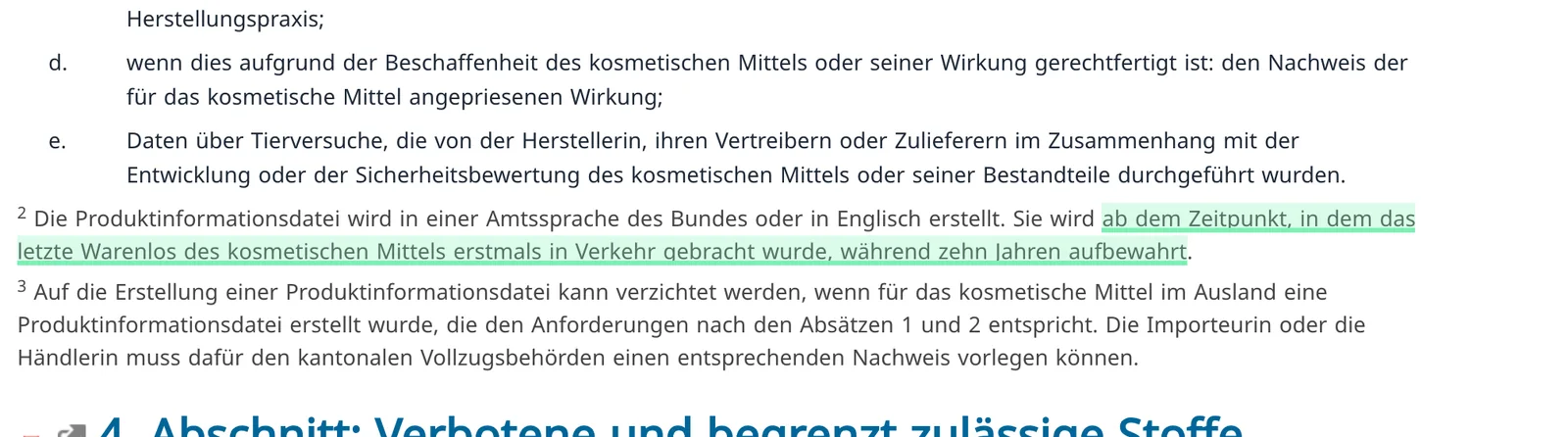
| Core dossier | PIF at the RP's address, 10 years after last batch | Self-monitoring file incl. PIF, same 10-year rule |
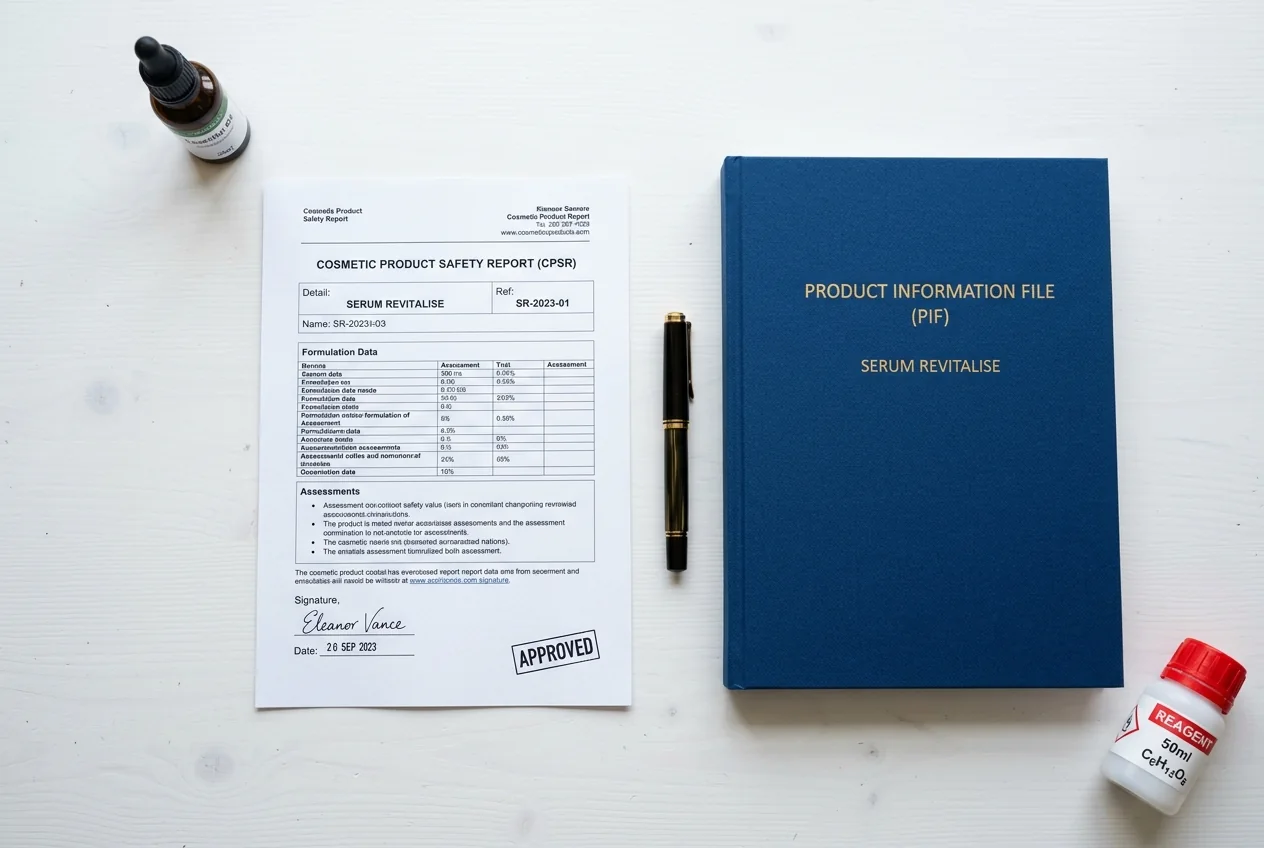
| Safety assessment | CPSR, Annex I format, signed by qualified assessor | Assessment to European standard, same assessor bar |
| Label languages | Set by each member state | Warnings in at least one of German, French or Italian |
| Enforcement | Member-state market surveillance | Cantonal laboratories, unannounced inspections |
Primary texts: Regulation (EC) No 1223/2009 and the Swiss Cosmetics Ordinance.
Does my EU compliance carry over to Switzerland?
That is the pattern across every Swiss mistake we see: brands reuse the evidence correctly and forget to rebuild the structure: the Swiss-domiciled role, the locally held file, the language check. The mechanics of the Swiss side are in our self-monitoring guide.
Do I need to notify anything in Switzerland?
For the EU side of that contrast (who files, what data CPNP takes, and when), see the CPNP notification guide.
Do I need a separate person in Switzerland?
Most brands solve this with a standing Swiss Agent arrangement mirroring their EU RP setup: same dossier, second address, one coordinated compliance structure.
Can one product file serve both markets?
Cost-wise that means the marginal price of Switzerland is the responsible-person arrangement and a label check, not a second dossier. The arithmetic is in our CPSR cost guide. For both markets together, request a quote.
Primary sources cited in this guide. Regulatory status last verified 26 July 2026.
Related reading