Swiss regulatory guide
Swiss self-monitoring, explained.
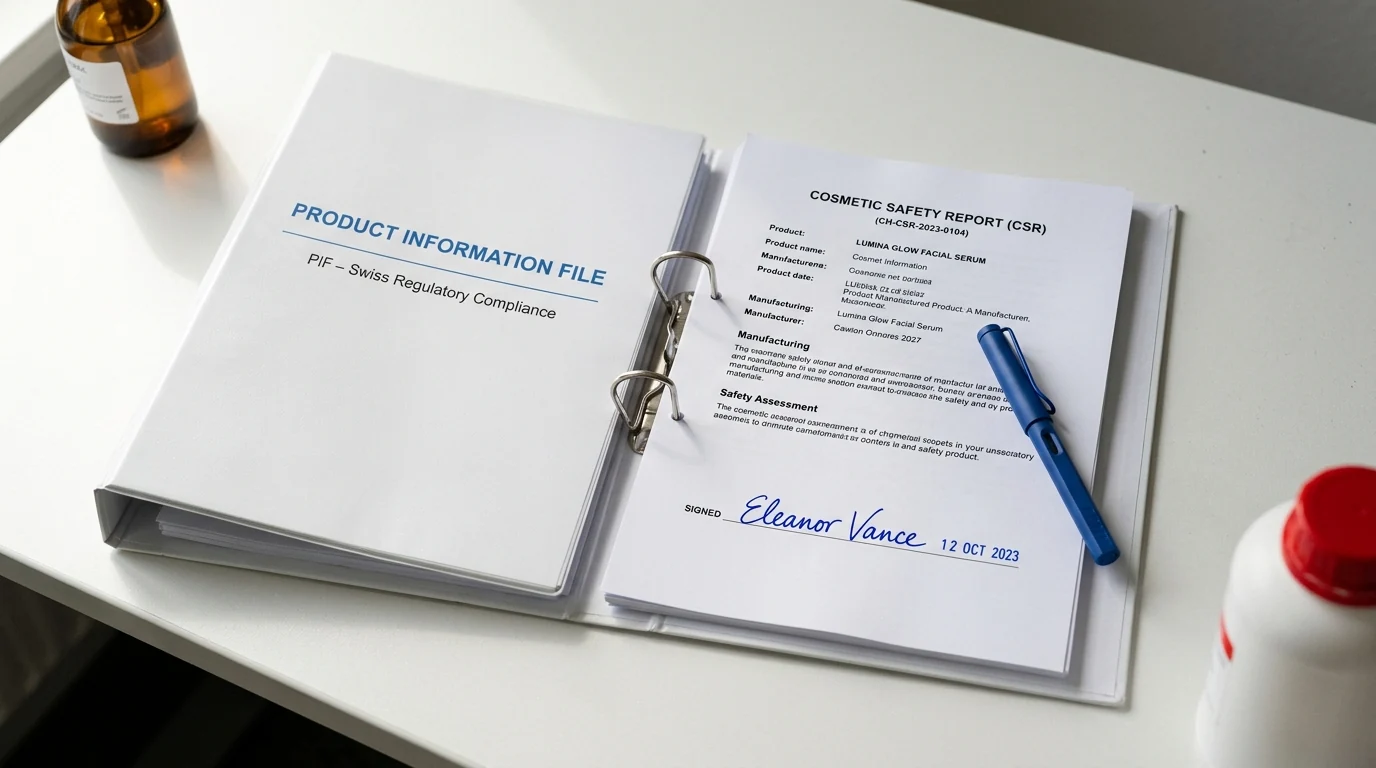
Switzerland has no notification portal and nothing to file before launch, which brands misread as "nothing to do". The Swiss model is self-monitoring: you keep a complete, current compliance dossier at a Swiss address, and cantonal inspectors can ask for it at any time, unannounced.
Reviewed by Cassandra Maddocks, chemist & biochemist · last reviewed 26 July 2026
What is Swiss self-monitoring?
The legal frame is the Swiss Cosmetics Ordinance, which aligns with European standards in substance. That alignment is exactly what misleads brands: the requirements feel familiar, but the mechanism is different: who holds what, and when control happens. The full market picture is in our Swiss market guide.
What must the self-monitoring dossier contain?
In practice the dossier is the same body of evidence an EU launch produces. That is why one well-built CPSR and PIF carries the Swiss load too. What Switzerland adds is the address requirement and the expectation that the file is current, not a snapshot from launch day.
Who enforces it?
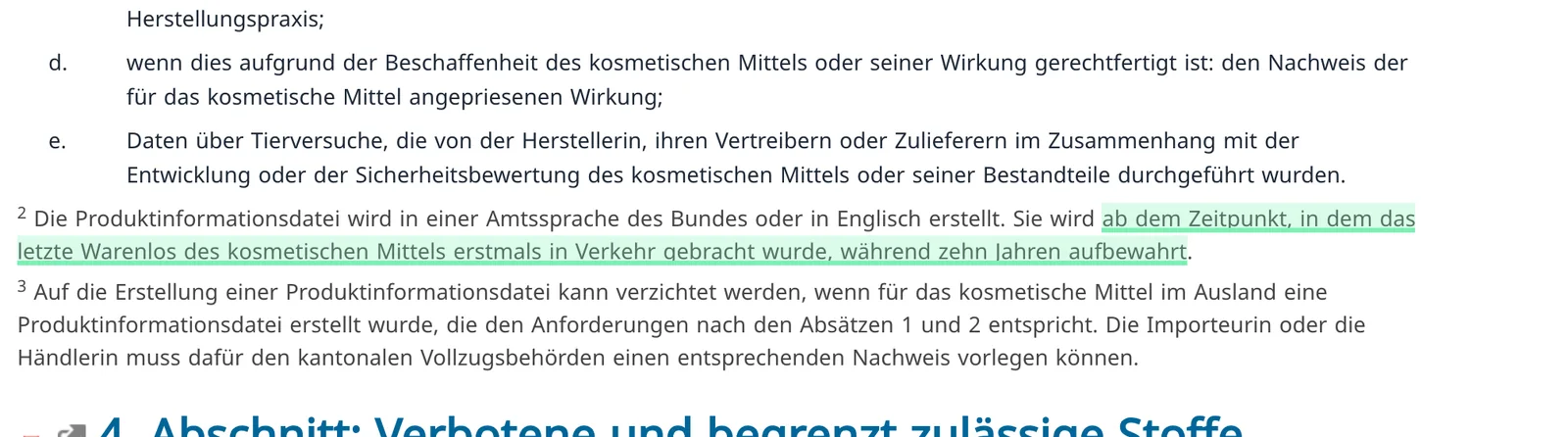
This inverts the EU's rhythm. Under a notification regime, the administrative work peaks before launch; under self-monitoring, the discipline is continuous, because the inspection date is not yours to choose.
What happens during a cantonal inspection?
Formula tweaks that never reached the safety assessment, claims added by marketing after the review, labels reprinted without the compliance pass: that drift is what an inspector finds. Keeping the file synchronised with the product is the actual work of self-monitoring, and it is what our Compliance Care service exists to do.
Does Switzerland really have a craft-fair exception?
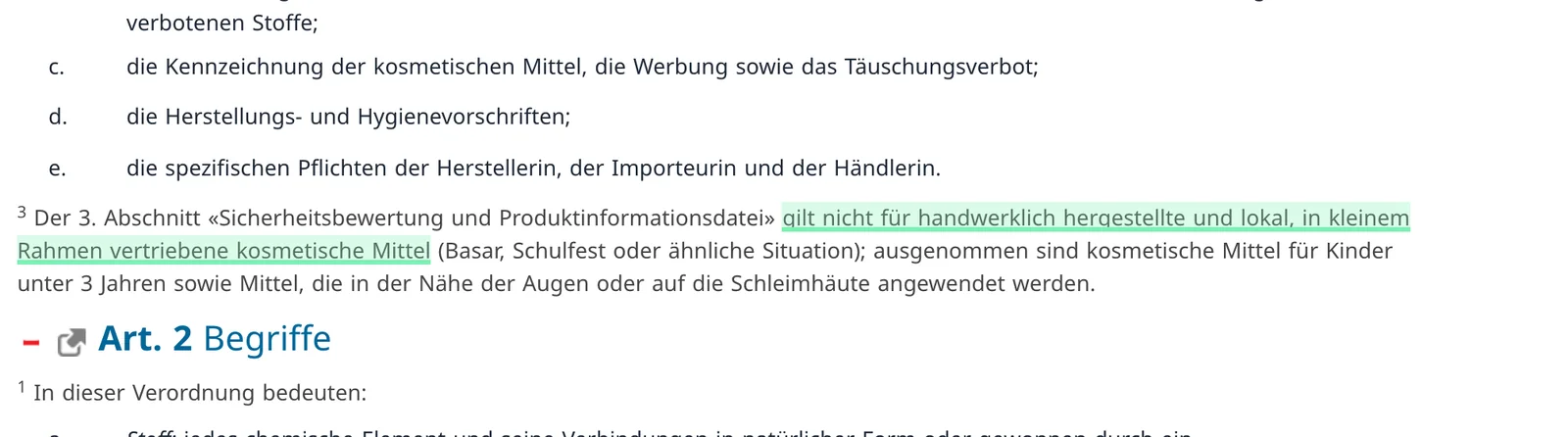
The exception is deliberately narrow: local, small scale, craft-made, and gone the moment you sell online or beyond that setting. It has no counterpart in the EU or UK, where a hobbyist carries the same duties as a multinational. Treat it as a curiosity that proves the rule, not a business model.
What are the most common self-monitoring mistakes?
The fix is structural, not administrative: appoint a Swiss-domiciled responsible person who holds the dossier at a Swiss address, and confirm the label carries warnings in at least one official Swiss language (German, French or Italian), as covered in our label requirements guide. For your own setup, request a Swiss compliance quote.
Primary sources cited in this guide. Regulatory status last verified 26 July 2026.
Related reading